Top Benefits of ERP for Growing Businesses
Discover how ERP helps growing businesses streamline operations, boost efficiency, and make smarter decisions-all from one central platform.
As a business grows, managing daily operations becomes more complex. Data starts living in multiple systems, teams struggle to stay aligned, and decision-making slows down. This is where ERP (Enterprise Resource Planning) comes in.
ERP is a centralised system that helps businesses manage core functions like finance, sales, inventory, HR, manufacturing, and customer operations-all from one platform. For growing businesses, ERP is not just a software upgrade; it’s a foundation for scalable growth.
Let’s explore the top benefits of ERP for growing businesses and why it has become essential in today’s competitive market.
Key Benefits Table
| Benefit | Impact on Growing Businesses | Key Features |
|---|---|---|
| Centralized Data | Ends silos; real-time access across teams | Unified database, no duplicates |
| Operational Efficiency | Automates invoicing, orders, payroll | Cuts manual errors by 50%+ |
| Financial Control | Tracks cash flow, forecasts accurately | Real-time reports, compliance |
| Scalable Growth | Adds users/locations seamlessly | Modular expansion, no rework |
| Team Collaboration | Shared system aligns sales/finance/inventory | Faster workflows, less miscommunication |
| Real-Time Insights | Dashboards reveal KPIs/trends | Data-driven decisions, bottleneck fixes |
| Customer Experience | Accurate orders, quick responses | Centralized CRM integration |
| Inventory Management | Prevents stockouts/overstock | Auto-reordering, demand planning |
| Compliance & Security | Audit trails, role-based access | Reduces risks as regulations grow |
| Long-Term Savings | Lowers tool costs, boosts productivity | Automates invoicing, orders, and payroll |
1. Centralised Data and Better Visibility
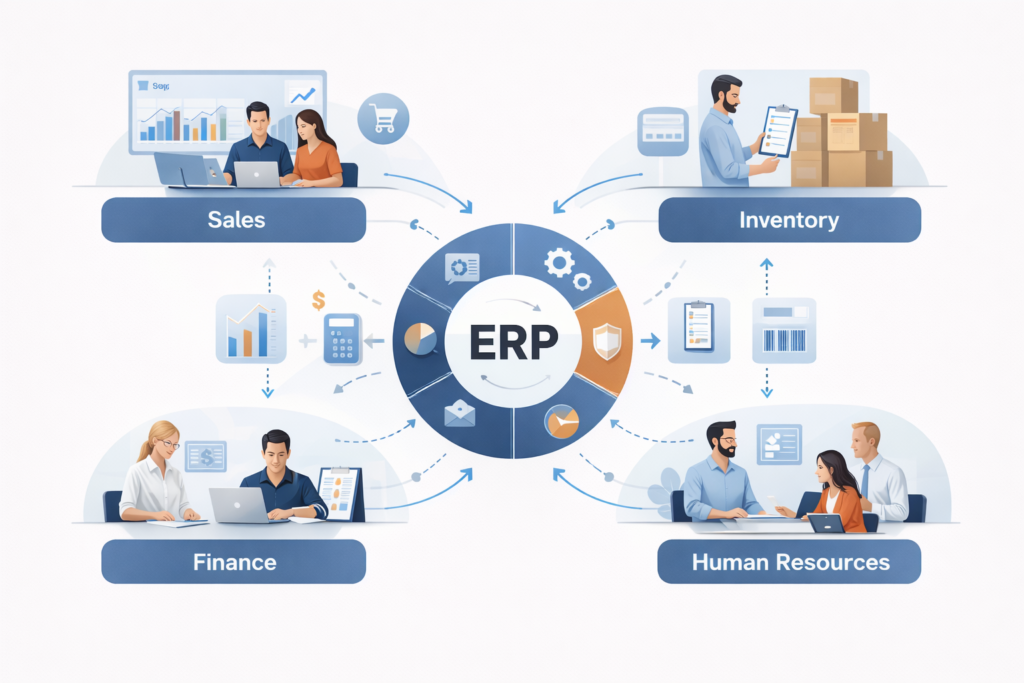
One of the biggest challenges for growing businesses is scattered data. Sales data might be in one tool, accounting in another, and inventory in spreadsheets.
An ERP system brings all business data into a single, unified platform. This means:
- Real-time access to accurate information
- No duplicate or conflicting data
- Better visibility across departments
With everything in one place, teams can work more efficiently, and leaders can make informed decisions faster.
2. Improved Operational Efficiency
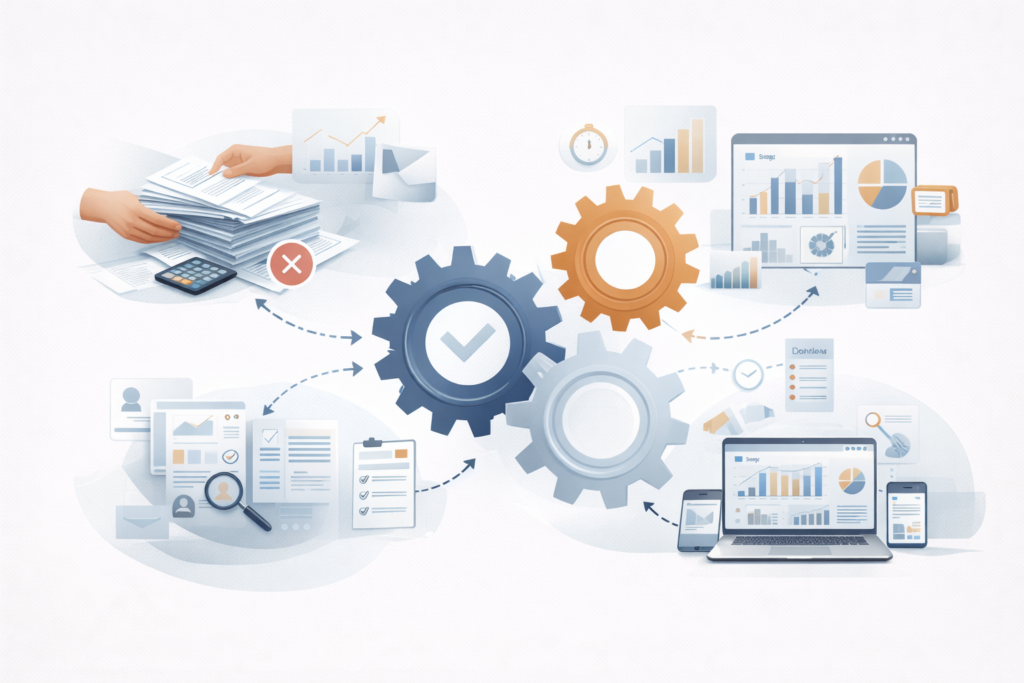
Manual processes and disconnected systems slow down operations and increase errors.
ERP automates routine tasks such as:
- Invoicing and billing
- Inventory updates
- Purchase orders
- Payroll and accounting entries
Automation reduces manual work, minimises mistakes, and allows teams to focus on high-value activities instead of repetitive tasks.
3. Better Financial Control
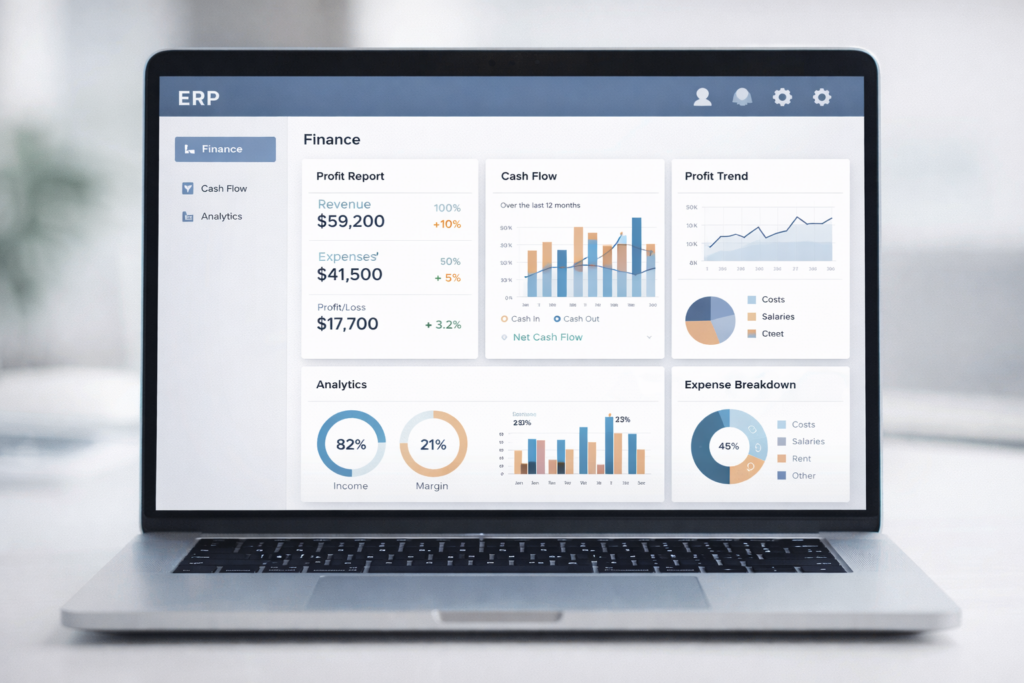
For growing businesses, managing cash flow and finances becomes more critical-and more complex.
ERP provides:
- Real-time financial reporting
- Better tracking of expenses and revenues
- Accurate budgeting and forecasting
- Compliance with accounting standards
With clear financial insights, businesses can control costs, improve profitability, and plan growth with confidence.
4. Scalable Growth Without Chaos

Many businesses outgrow their existing tools quickly. What worked for a small team often fails when operations expand.
ERP systems are highly scalable, meaning:
- You can add new users, departments, or locations easily
- New features can be enabled as the business grows
- Processes remain structured, even with expansion
This allows businesses to grow without operational chaos.
5. Enhanced Collaboration Across Teams

When departments use different tools, collaboration becomes difficult. ERP ensures that everyone works on the same system and the same data.
Benefits include:
- Smooth coordination between sales, inventory, and finance
- Faster approvals and workflows
- Reduced miscommunication
Teams stay aligned, and work moves faster across the organisation.
6. Smarter Decision-Making with Real-Time Insights
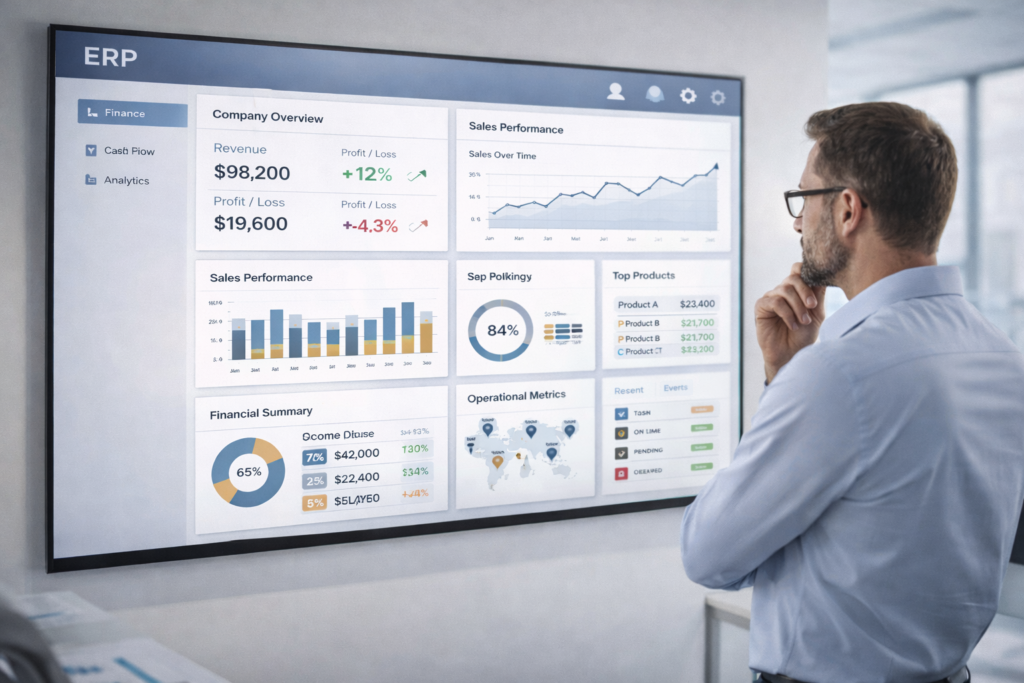
ERP systems come with powerful dashboards and reports that provide real-time business performance data.
This helps businesses:
- Track KPIs easily
- Identify bottlenecks early
- Analyse trends and opportunities
- Make data-driven decisions instead of guesses
For growing businesses, timely decisions can make a huge difference.
7. Better Customer Experience

Happy customers are key to business growth. ERP helps improve customer experience by:
- Managing customer data in one place
- Tracking orders and deliveries accurately
- Ensuring faster response times
- Reducing errors in billing and fulfilment
When operations run smoothly, customers notice the difference.
8. Stronger Inventory and Supply Chain Management
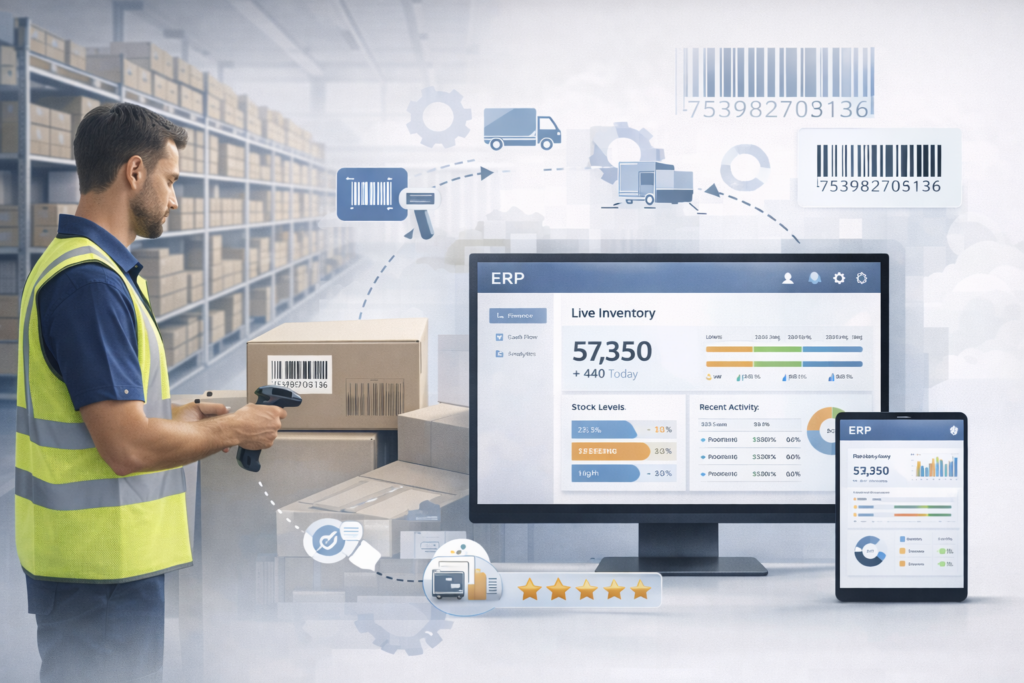
Poor inventory management can lead to overstocking, stockouts, and lost sales.
ERP provides:
- Real-time inventory tracking
- Better demand planning
- Automated reordering
- Improved supplier management
This results in reduced costs and enhanced fulfilment efficiency.
9. Improved Compliance and Data Security
As businesses grow, compliance requirements increase. ERP systems help by:
- Maintaining proper audit trails
- Ensuring data consistency and accuracy
- Offering role-based access control
- Protecting sensitive business data
This reduces risks and improves overall business reliability.
10. Long-Term Cost Savings
While ERP requires an initial investment, it delivers significant long-term value by:
- Reducing operational inefficiencies
- Lowering error-related costs
- Minimising dependency on multiple tools
- Improving productivity across teams
Over time, ERP becomes a cost-effective solution for sustainable growth.
Conclusion
ERP is no longer just for large enterprises. Today, growing businesses need ERP to stay competitive, organised, and future-ready.
By centralising data, automating processes, improving visibility, and enabling smarter decisions, ERP provides a strong foundation for growth. Businesses that adopt ERP early are better equipped to scale smoothly, serve customers better, and achieve long-term success.
FAQs
Question: How does ERP improve operational efficiency?
Answer: Automates invoicing/payroll, eliminates silos-cuts manual errors 50%+.
Question: Is ERP scalable for small businesses?
Answer: Yes, modular design adds users/features as you grow without chaos.
Question: ERP vs multiple tools: Why centralise?
Answer: Unified data ends duplicates; real-time insights speed decisions 3x.
Question: What ROI timeline for ERP?
Answer: 1-3 years via cost savings and productivity gains for growing firms.