Odoo vs SAP: Which ERP Is Better for SMEs?
Odoo and SAP are two leading ERP solutions, but their suitability for SMEs depends on budget, flexibility, and business complexity. This comparison helps businesses choose the ERP that aligns best with their growth goals.

Choosing the right ERP (Enterprise Resource Planning) solution is a major strategic decision for any business – especially for small and medium-sized enterprises (SMEs). An ERP system centralises key business functions such as accounting, CRM, inventory, HR, and production into one platform, improving efficiency and visibility. However, the choice between Odoo and SAP often comes down to the specific needs, budget, and complexity of the business.
This blog explores the key differences between Odoo and SAP, helping you determine which is better suited for your SME.
1. Quick Overview: Odoo and SAP
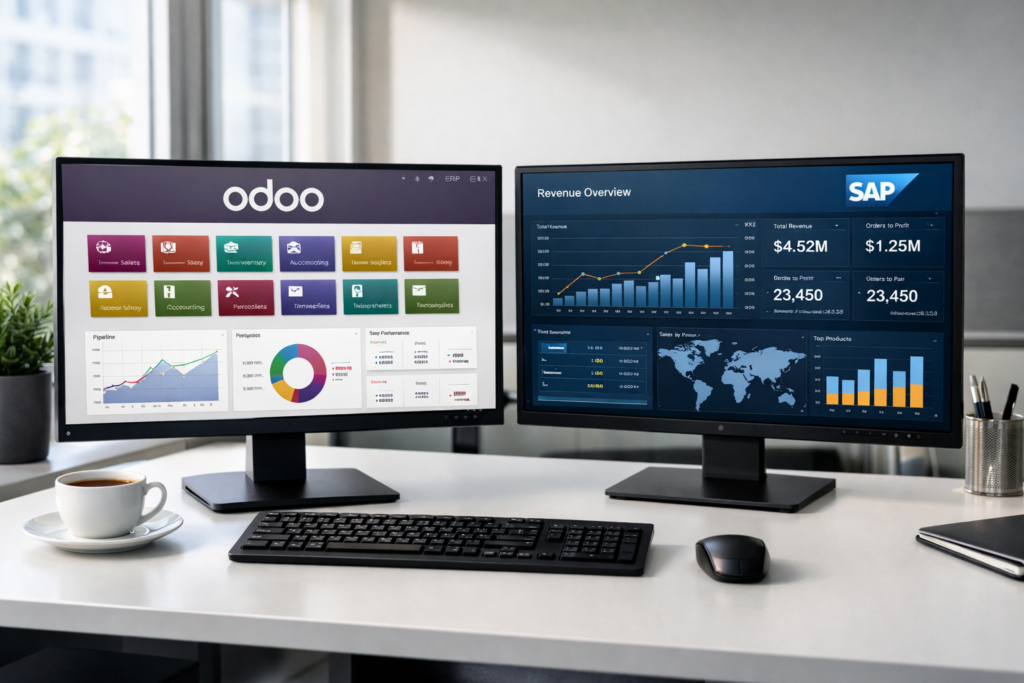
| Aspect | Odoo | SAP |
|---|---|---|
| Target | SMEs, modular growth | Enterprises, complex ops |
| Editions | Open-source Community + Enterprise cloud | S/4HANA, Business One |
| Strength | Simple, affordable scaling | Robust, compliant scale |
Detailed Comparison Table
| Criterion | Odoo Advantage | SAP Advantage | SME Winner |
|---|---|---|---|
| Cost/TCO | Modular pricing, free Community edition | High licensing + maintenance | Odoo-budget-friendly |
| Implementation | Weeks via cloud modules | Months/years + consultants | Odoo-fast rollout |
| User Experience | Intuitive UI, minimal training | Powerful but complex | Odoo-SME teams |
| Customisation | Open-source flexibility | Certified experts needed | Odoo-dynamic needs |
| Scalability | Add modules as you grow | Enterprise-grade | Tie-Odoo for SME growth |
| Integrations | Easy APIs, 30K+ apps | Middleware-heavy | Odoo-common SME tools |
| Support | Global community + paid | 24/7 premium | SAP-mission-critical |
2. Cost and Total Cost of Ownership (TCO)
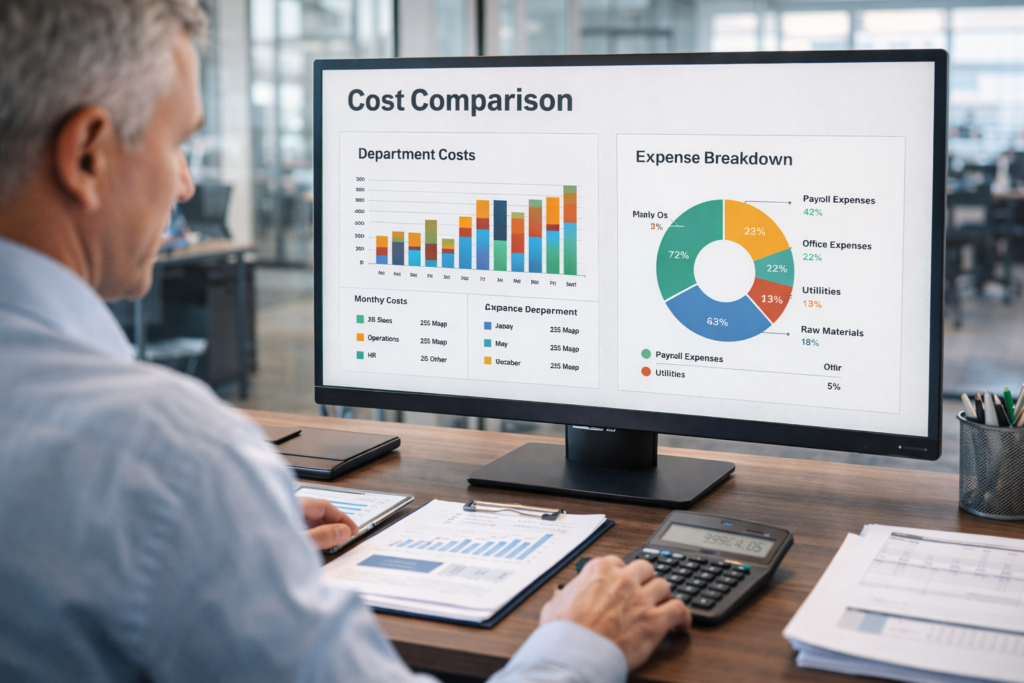
Odoo:
- Significantly more affordable for SMEs.
- Offers flexible, modular pricing, allowing businesses to pay only for what they need.
- The open-source Community edition can be used with minimal licensing costs.
SAP:
- Requires substantial upfront investment in licensing and implementation.
- Ongoing maintenance, annual support, and upgrades add to the total cost.
- Often more expensive for SMEs with limited budgets.
Verdict: Odoo typically wins on cost, making it a better choice for budget-conscious SMEs.
3. Implementation Time and Complexity

Odoo:
- Faster implementation due to its modular approach.
- SMEs can launch core functionalities quickly and expand later.
- Cloud-based options simplify deployment without heavy IT infrastructure.
SAP:
- Implementation is more complex and time-intensive.
- Requires specialised consultants, especially for SAP S/4HANA.
- Typical deployment can take several months to years.
Verdict: Odoo’s phased rollout approach is better suited for SMEs looking for speed and flexibility.
4. User Experience and Training

Odoo:
- Focuses on simplicity and ease of use with an intuitive interface.
- Reduces learning time, especially for non-technical staff.
- Ideal for teams without deep IT expertise.
SAP:
- Powerful but complex – often requires comprehensive training.
- The interface and workflows can feel technical and rigid to new users.
Verdict: Odoo scores high on user-friendliness, a big plus for SMEs with limited training budgets.
5. Customisation and Flexibility
Odoo:
- Highly customizable due to its open-source nature and modular design.
- Businesses can tailor workflows, add features, and integrate third-party apps easily.
SAP:
- Customisation is possible but requires certified professionals and often comes with higher costs.
- Heavy customisations can extend timelines and budgets.
Verdict: Odoo offers flexibility that better aligns with the dynamic needs of growing SMEs.
6. Scalability and Business Growth

Odoo:
- Scales naturally with business growth – add modules like manufacturing, eCommerce, or marketing automation over time.
- Can support growth without overwhelming complexity.
SAP:
- Designed to scale to enterprise-level complexity.
- Ideal for large multinational operations with highly specialised processes.
Verdict: While SAP scales exceptionally well, its complexity often exceeds the practical needs of most SMEs.
7. Integration and Third-Party Support
Odoo:
- Supports integration with a broad range of third-party applications.
- Cloud architectures and APIs make connections smoother.
SAP:
- Integration is strong but often requires middleware and significant technical configuration.
Verdict: Odoo is typically easier and more cost-effective for integrating existing tools used by SMEs.
8. Support and Community
Odoo:
- Benefits from a large global community.
- Enterprise support adds professional service options.
- Community Edition users rely on forums, partners, or third-party consultants.
SAP:
- Offers professional 24/7 support through official channels and a global partner network.
- Premium support often comes with extra cost.
Verdict: SAP’s support is robust but expensive; Odoo’s community network offers more accessible assistance.
9. When SAP Might Still Be Better
While Odoo is generally better for SMEs, SAP may be more suitable in specific scenarios:
- Businesses with extremely complex processes across multiple countries.
- Large enterprises with compliance, regulatory, and audit demands.
- Organizations requiring deep, industry-specific functionality.
In such cases, SAP’s power and structure justify the higher cost and complexity.
Conclusion: Which ERP Is Better for SMEs?

For most SMEs, Odoo stands out as the more practical and cost-effective ERP choice. It offers:
- Lower costs and faster implementation,
- User-friendly design,
- Modular scalability,
- Easy customisation and integrations,
- And flexible deployment options – all tailored to SME needs.
SAP, while exceptionally powerful, tends to be better suited for large enterprises or SMEs with complex, global-scale operations that justify its higher cost and implementation requirements.
Ultimately, the right ERP depends on your business goals, budget, and process complexity – but for most SMEs, Odoo provides the best balance of features, cost, and flexibility.
FAQs
Question: Odoo vs SAP cost comparison?
Answer: Odoo: Modular/free Community (₹0-50K/mo); SAP: ₹5-50L+ upfront + maintenance.
Question: Is Odoo scalable for SME growth?
Answer: Yes, add modules (manufacturing, eCommerce) without S/4HANA complexity.
Question: When choosing SAP over Odoo?
Answer: Multi-country compliance, deep industry verticals, and an existing SAP ecosystem.
Question: Odoo implementation time vs SAP?
Answer: Odoo: Weeks; SAP: 6-24 months for SMEs.